Production AI
Speculative Decoding
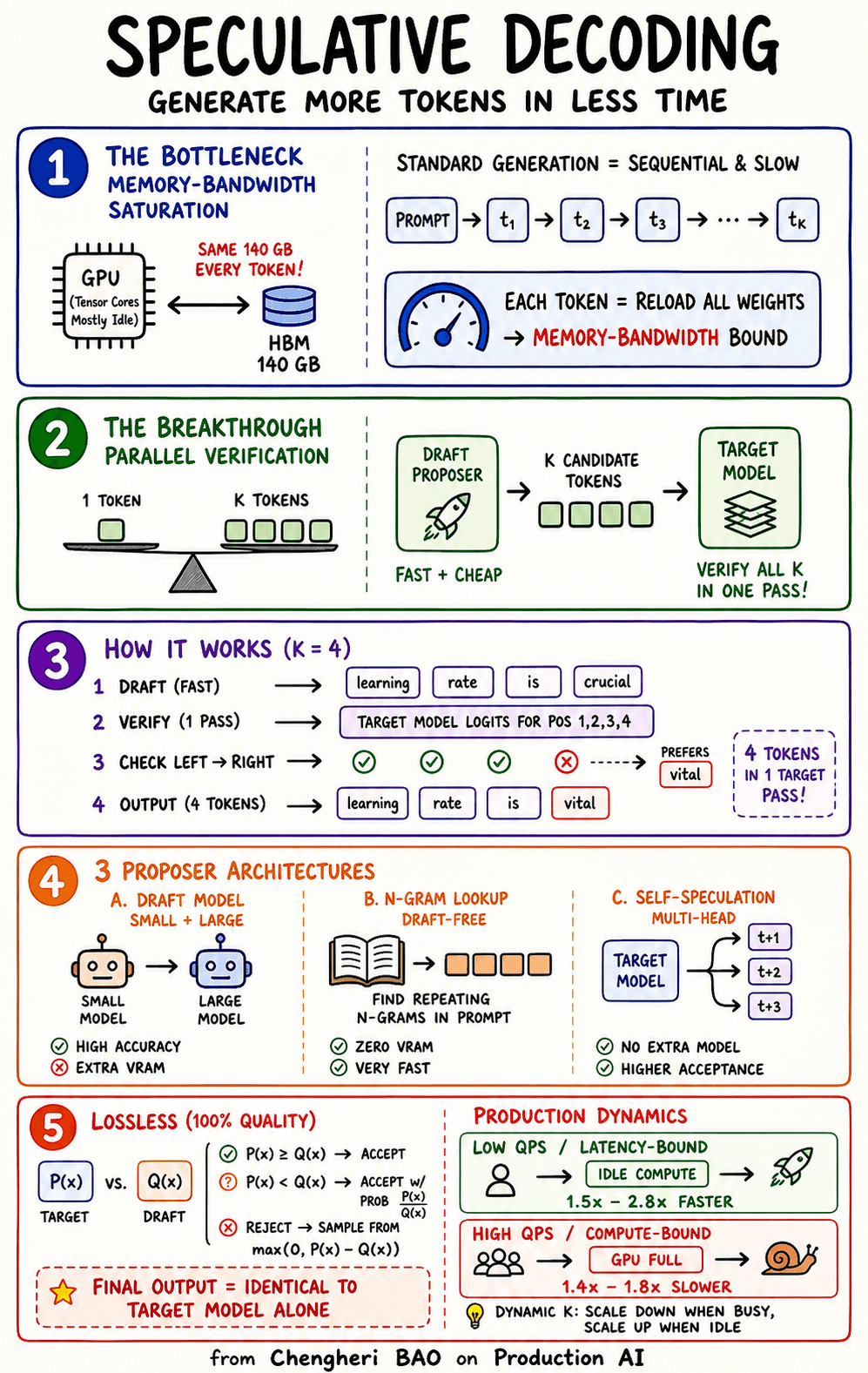
Speculative decoding speeds up LLM generation by exploiting a key asymmetry: 𝘁𝗼𝗸𝗲𝗻 𝗴𝗲𝗻𝗲𝗿𝗮𝘁𝗶𝗼𝗻 𝗶𝘀 𝘀𝗲𝗾𝘂𝗲𝗻𝘁𝗶𝗮𝗹, 𝗯𝘂𝘁 𝘁𝗼𝗸𝗲𝗻 𝘃𝗲𝗿𝗶𝗳𝗶𝗰𝗮𝘁𝗶𝗼𝗻 𝗶𝘀 𝗽𝗮𝗿𝗮𝗹𝗹𝗲𝗹.
𝗠𝗮𝗶𝗻 𝗯𝗼𝘁𝘁𝗹𝗲𝗻𝗲𝗰𝗸: Standard autoregressive decoding is memory-bandwidth bound. Each new token requires another full pass over the model weights in HBM, so GPUs spend much of their time waiting on memory rather than doing math.
𝗖𝗼𝗿𝗲 𝗶𝗱𝗲𝗮: Use a cheap draft proposer to guess several future tokens, then have the large target model verify them all at once in a single parallel forward pass.
𝗛𝗼𝘄 𝗶𝘁 𝘄𝗼𝗿𝗸𝘀: The draft model proposes K tokens; the target model checks them left-to-right, accepts matching tokens, and replaces any mismatch with a token sampled from the target distribution.
𝗪𝗵𝘆 𝗶𝘁’𝘀 𝗹𝗼𝘀𝘀𝗹𝗲𝘀𝘀: With modified rejection sampling, the final output distribution is identical to sampling from the target model alone, so quality is preserved exactly.
𝗗𝗿𝗮𝗳𝘁 𝗺𝗲𝗰𝗵𝗮𝗻𝗶𝘀𝗺𝘀:
- 𝗦𝗺𝗮𝗹𝗹 𝗱𝗿𝗮𝗳𝘁 𝗺𝗼𝗱𝗲𝗹 + 𝗹𝗮𝗿𝗴𝗲 𝘁𝗮𝗿𝗴𝗲𝘁 𝗺𝗼𝗱𝗲𝗹 — good accuracy, but extra VRAM.
- 𝗣𝗿𝗼𝗺𝗽𝘁 𝗹𝗼𝗼𝗸𝘂𝗽 / 𝗻-𝗴𝗿𝗮𝗺 𝗺𝗮𝘁𝗰𝗵𝗶𝗻𝗴 — no extra model, very fast, best when output overlaps with context (𝗲.𝗴., 𝗥𝗔𝗚).
- 𝗦𝗲𝗹𝗳-𝘀𝗽𝗲𝗰𝘂𝗹𝗮𝘁𝗶𝗼𝗻 𝗵𝗲𝗮𝗱𝘀 — extra heads on the target model predict future tokens without a separate draft model.
𝗣𝗿𝗼𝗱𝘂𝗰𝘁𝗶𝗼𝗻 𝘁𝗿𝗮𝗱𝗲-𝗼𝗳𝗳:
- At 𝗹𝗼𝘄 𝗤𝗣𝗦, speculative decoding usually helps a lot because GPUs have idle compute.
- At 𝗵𝗶𝗴𝗵 𝗤𝗣𝗦, it can hurt latency because the system is already compute-saturated, so extra verification adds overhead.
𝗣𝗿𝗮𝗰𝘁𝗶𝗰𝗮𝗹 𝘁𝗿𝗲𝗻𝗱: Modern systems use 𝗱𝘆𝗻𝗮𝗺𝗶𝗰 𝘀𝗽𝗲𝗰𝘂𝗹𝗮𝘁𝗶𝗼𝗻, adjusting speculative length based on current load.
Speculative decoding trades a little extra draft work for fewer expensive target-model passes, giving substantial latency gains when the GPU is memory-bound and underutilized.
flowchart TB
  A["Faster generation ≠ bigger model"] --> B["GPU trace reveals bottleneck"]
  B --> C["Memory bandwidth, not math"]
  C --> D["Speculative decoding"]

  D --> E["Cheap draft model"]
  D --> F["Expensive target model"]
  E --> G["Sequential token proposals"]
  F --> H["Parallel verification pass"]

  D --> I["Same target distribution"]
  D --> J["Faster execution"]

  subgraph R1["Core requirements"]
    K["Tokenizer + vocabulary must match"]
    L["Target model defines quality"]
    M["Draft only proposes"]
  end

  subgraph R2["When it helps or hurts"]
    N["Low-QPS: latency drops"]
    O["High-QPS: may backfire"]
    P["Spec length = dynamic knob"]
  end

  subgraph R3["Implementation options"]
    Q["Small draft model"]
    R["Prompt / N-gram lookup"]
    S["Self-speculation heads"]
  end

  Q --> T["Trade-offs: VRAM, acceptance, complexity"]
  R --> T
  S --> T

  D --> K
  D --> L
  D --> M
  D --> N
  D --> O
  D --> P

  classDef insight fill:#dbeafe,stroke:#2563eb,color:#111827;
  classDef process fill:#dcfce7,stroke:#16a34a,color:#111827;
  classDef constraint fill:#fef9c3,stroke:#ca8a04,color:#111827;
  classDef tradeoff fill:#fee2e2,stroke:#dc2626,color:#111827;
  classDef option fill:#ede9fe,stroke:#7c3aed,color:#111827;

  class A,B,C,D insight;
  class E,F,G,H process;
  class K,L,M constraint;
  class N,O,P tradeoff;
  class Q,R,S,T option;