Production AI
Jev
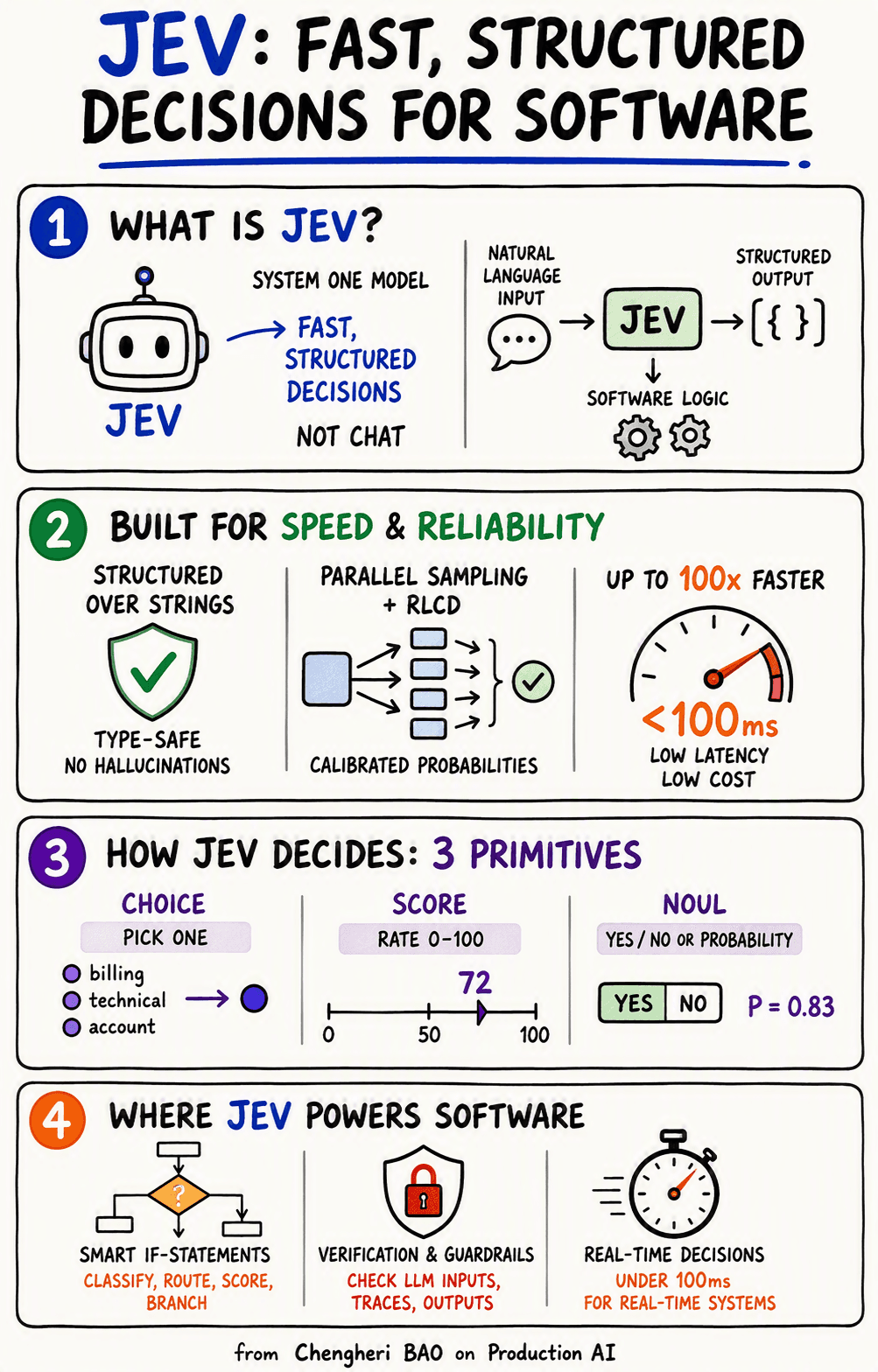
A model that never writes the answer can still make the right decision.
I first think of Jev as a traffic controller, not a chatbot.
It looks at the incoming signal, decides where it should go, and hands a structured result to the rest of the system.
No chatty explanation. No free-form text. Just a decision software can use immediately.
That’s the lesson: for some AI tasks, the goal is not generation — it’s fast, reliable judgment.
What makes that useful in practice:
- Structured outputs: Jev returns typed decisions, so the application can consume them directly.
- Fast decisions: it evaluates in parallel, instead of predicting text token by token.
- Calibrated confidence: it is trained so higher confidence actually means higher accuracy.
- Production fit: it works well for routing, scoring, boolean checks, and guardrails.
That’s why Jev makes sense for things like:
- routing a support ticket
- flagging a jailbreak
- checking whether a refund is being requested
- making low-latency decisions in real-time systems
In other words: it’s built for the part of AI that sits between the input and the workflow.
Where do you think structured decision models matter most in production today?